
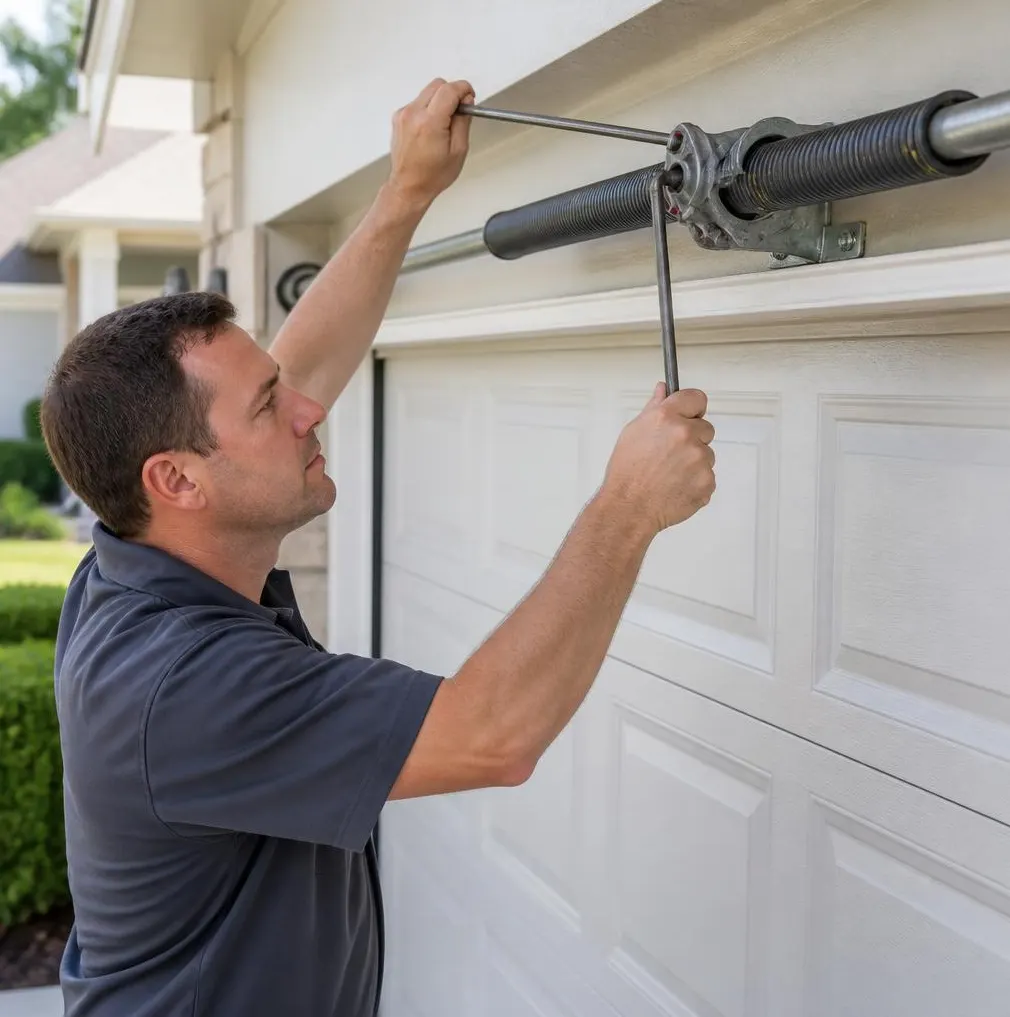
The Moment You Notice Something's Wrong
You hit the opener button on a cold morning, and instead of the usual smooth rise, you hear a groan, a crack, and the door stops after an inch or two. Maybe the top panel flexes slightly while the bottom stays put, like it's glued to the slab. Or the opener motor just hums and strains, the chain or belt jerking without the door moving at all. If you've lived through a few Tennessee winters, you already know this isn't rare — a hard overnight freeze after a wet day is enough to turn a normal garage door into a stuck one.
The Symptoms Worth Paying Attention To
Before you force anything, take a second to notice exactly what's happening. The specific symptom usually points to the cause:
- A visible frost or ice line along the bottom weatherstrip where it meets the concrete
- The door lifts partway, then stalls or reverses back down on its own
- A loud crack or pop right as the door breaks free, followed by normal movement
- The opener motor strains or grinds but the door barely moves
- One side lifts before the other, leaving the door crooked in the track
Each of these points to a different weak link in the system, and checking them in order saves you from replacing parts that were never the problem.
What a Technician Checks First: The Seal
The most common culprit, especially after the heavy rain and heavy humidity typical in this part of Tennessee, is simple ice. Rain or condensation sits under the bottom weatherstrip, temperatures drop overnight, and the rubber seal freezes solid to the driveway or garage slab. This is almost always the first thing to rule out, because it's the easiest to fix and the easiest to damage further if you ignore it.
What the fix involves: Never force the opener through a frozen seal — that's how panels bend and openers burn out trying to overpower ice. Instead, the ice bond needs to be broken gently, either with a heat gun held at a safe distance, warm (not boiling) water poured along the seal line, or simply a flathead tool run carefully along the edge to separate rubber from concrete. Once free, the slab should be dried and the weatherstrip inspected. A seal that's cracked, flattened, or no longer sitting flush is what let moisture pool there in the first place, and replacing it is a straightforward fix that prevents a repeat.
Second Check: Dirty or Stiff Rollers and Tracks
Standard petroleum-based lubricants thicken in cold air, and combined with months of pollen, dust, and garage grime, rollers can go from smooth to sluggish fast. This shows up as a door that moves unevenly, hesitates at certain points in the track, or makes a dry scraping sound instead of a smooth glide.
What the fix involves: The tracks get wiped clean of old grease and debris, then rollers and hinges are relubricated with a silicone or lithium-based garage door lubricant rated for cold temperatures — not household oil or WD-40, which actually attract more grit over time. Worn or flat-spotted rollers found during this check get flagged for replacement before they cause bigger alignment problems.
Third Check: Spring Tension
Metal contracts slightly in cold weather, and torsion springs that were already fatigued from years of cycling can feel noticeably heavier on a frigid morning. This is often what's really behind an opener that strains and groans without visible ice anywhere — the door has simply gotten too heavy for the spring to lift efficiently, cold or not.
What the fix involves: This is not a DIY step. A technician measures the door's balance by checking how it holds position when disconnected from the opener, and adjusts or replaces the spring accordingly. A properly tensioned door should stay roughly level when lifted halfway by hand. If it crashes down or shoots up, the spring is doing the wrong amount of work, and cold weather just exposed it sooner.
Fourth Check: Opener Force Settings
If the door has been fighting stiff rollers or heavy springs for a while, the opener's force settings may have been tripping its safety reversal more often, especially if it misreads the added resistance as an obstruction. Recalibrating force and limit settings is the last step, done only after the mechanical issues above are resolved — adjusting the opener first just masks a problem that will come back.
Why This Matters More With Local Winters
Thompson's Station doesn't get the kind of sustained deep freeze some regions do, but the pattern of heavy rain followed by a sharp overnight temperature drop, sometimes with an ice storm thrown in, is exactly the setup that freezes seals and stiffens hardware. Garages here also deal with pine needles and moisture collecting around the base of the door, which holds water right where it can freeze.
When to Call Thompson's Station Garage Door
If you've broken the door free from ice more than once this season, if the opener strains even on milder mornings, or if the door feels noticeably heavier than it used to when lifted by hand, it's worth having it looked at before a part fails outright. Our Garage Door Maintenance visits cover exactly this sequence — seal condition, roller and track lubrication, and spring balance — so small issues get caught before a cold snap turns them into a stuck door at 7 a.m. If the spring itself is the problem, our Spring Replacement service handles that safely with properly matched tension for your door's weight.
If your garage door in Thompson's Station, Spring Hill, Franklin, or anywhere nearby is sticking, straining, or freezing shut this season, give Thompson's Station Garage Door a call and we'll get it moving smoothly again before winter sets in for good.