
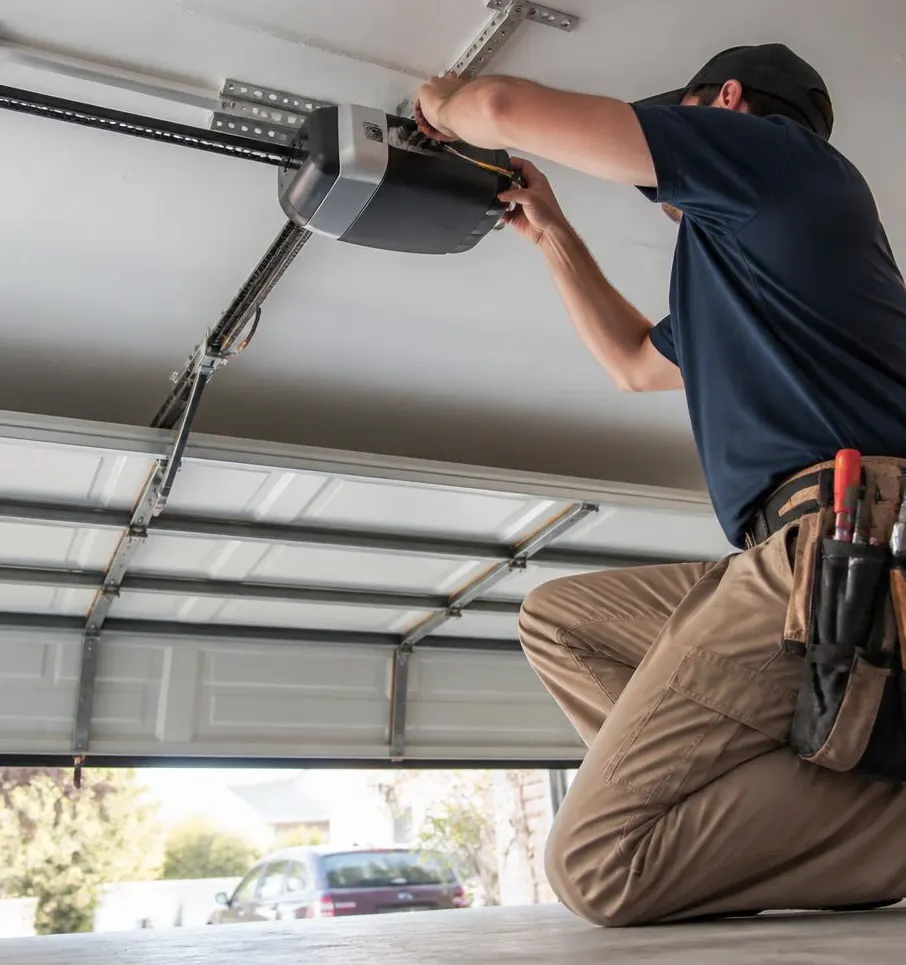
What a Technician Sees on a Typical Call
Most "my garage door won't open" calls we get this time of year start the same way: a homeowner presses the remote, hears a click or a hum, and nothing moves. Sometimes the door shudders an inch and stops. Sometimes it's dead silent. By the time we pull into the driveway, we've usually already got a short list of suspects narrowed down just from what the homeowner describes over the phone, and the diagnosis almost always follows the same sequence.
The Symptoms That Point to Different Problems
Before touching anything, a good technician listens for specifics, because the symptom usually points to the cause:
- Nothing happens at all — no light, no hum, no click. Points to power.
- The opener light turns on but the door doesn't move — points to the sensors or the opener's internal mechanism.
- A loud bang was heard right before it stopped working — almost always a broken spring.
- The door moves a little, then reverses or stops — often a sensor, obstruction, or travel-limit issue.
- The motor runs, but the door doesn't budge — usually a stripped gear or a disconnected trolley.
The Causes, in the Order a Technician Checks Them
1. Power to the Opener
First check is always the simplest: is the opener actually getting power? A tripped breaker, a GFCI outlet that popped, or a loose plug are common culprits, especially after one of the heavy rain or wind events that roll through Williamson County. If the outlet is on a GFCI circuit (code in many garages), a nearby power blip or even humidity intrusion can trip it. The fix here is just resetting the breaker or outlet and confirming it holds.
2. Remote and Wall Button
Dead remote batteries, a wall button with a worn wire, or signal interference from a new router or security system can all mimic a "dead" opener. A technician will test the wall-mounted button directly, since it bypasses the remote entirely. If the wall button works but the remote doesn't, the fix is as simple as new batteries or reprogramming.
3. Safety Sensors (Photo Eyes)
The two small sensors near the bottom of the tracks have to have a clear, aligned line of sight, or the opener won't let the door close or, in some cases, won't let it move at all. This is a big one locally: humidity and condensation can fog the lenses, pollen leaves a fine film on the glass during the heavier pollen stretches of the year, and spiderwebs or pine debris blown in after a storm can block the beam. The fix is cleaning both lenses with a soft cloth and realigning them so the indicator lights on both units are solid, not blinking.
4. Manual Disconnect (Emergency Release)
If the red release cord hanging from the trolley got bumped or accidentally pulled, the door disengages from the opener and will not respond to any remote or button, even though the opener runs fine. This happens more often than people expect, especially in garages where bikes, ladders, or holiday decorations get stored overhead. The fix is simply re-engaging the trolley, though a technician will also check that the carriage didn't jump the track.
5. Springs
Torsion springs above the door or extension springs along the tracks do the heavy lifting. A broken spring shows up as a visible gap in the coil, a door that feels impossibly heavy when lifted by hand, or that loud bang homeowners often report hearing. Cooler fall mornings actually bring a small seasonal uptick in spring failures, since metal contracts slightly in the cold and a spring already near the end of its lifespan is more likely to snap. This is not a DIY repair — torsion springs are under heavy tension and require the right tools and experience to replace safely.
6. Cables
The cables that run alongside the springs can fray or snap off the drum, often from years of moisture exposure in a garage that sees a lot of rain splash or standing humidity. A frayed cable will usually show visible wear before it fails completely; a snapped one causes the door to hang crooked or drop on one side. Replacement involves removing tension from the system safely, which again is spring-adjacent work best left to a trained technician.
7. Opener Gear or Motor
If the motor runs but the door doesn't move, the internal drive gear, often made of nylon, may be stripped. This is common on older openers and tends to show up as a grinding sound right before failure. The fix is replacing the gear kit or, if the motor itself has burned out, the opener.
8. Track Obstruction or Misalignment
Debris, a bent track section, or ice buildup in the colder months can all stop the door mid-travel. A visual inspection of the full length of both tracks, checking for gaps, dents, or anything wedged inside, usually reveals this quickly.
9. Circuit Board or Logic Board Damage
Power surges from storms, including the remnants of tropical systems that sometimes move through inland Tennessee, can fry an opener's control board. If everything else checks out and the opener still won't respond, this is usually the final answer, and it typically means replacing the opener unit.
When to Call Thompson's Station Garage Door
If you've reset the breaker, checked the remote batteries, and wiped down the sensors and the door still won't move, it's time to call. A broken spring, a frayed cable, or a stripped gear all involve tension or mechanics that aren't safe to troubleshoot solo. We offer Spring Replacement and Garage Door Opener Repair & Installation for exactly these situations, and we'll walk through the full diagnostic sequence above on-site so you know what actually failed and why.
If your garage door in Thompson's Station, TN won't open, give us a call. We'll get it diagnosed and working again, the right way, the first time.